The Power of Reading Aloud: Why Your Voice Is the Best Story Your Child Will Ever Hear
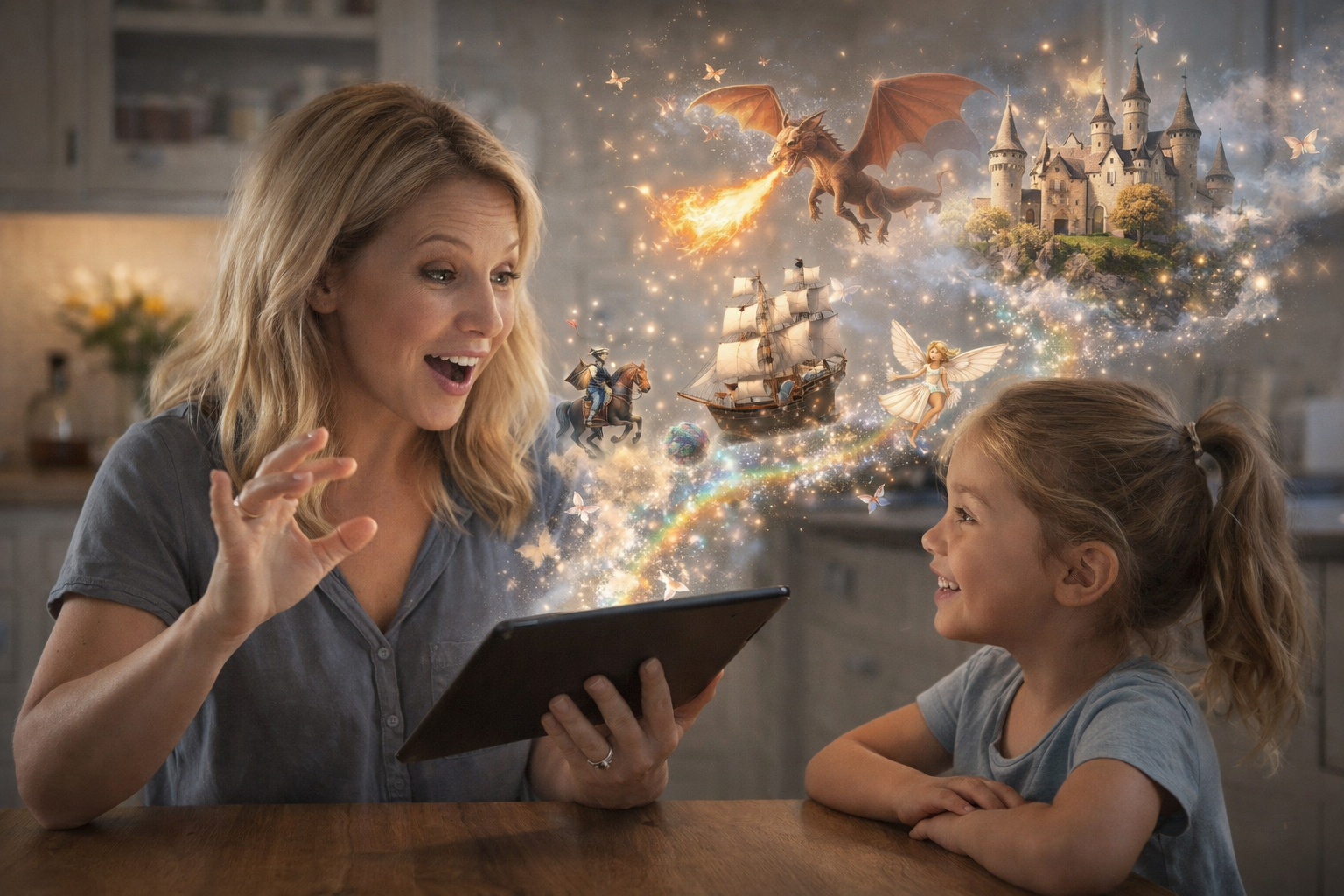
There is a moment that most parents know well. The room is dim, the day is finally winding down, and a small child settles in close, waiting. Then you open a book and start to read, and something changes in the air. The fidgeting stops. The questions come. The world outside the room disappears entirely.
Reading aloud is one of the oldest things humans do together. Long before children could read on their own, stories were spoken out loud, passed from one person to the next. That tradition never stopped being powerful. Science just caught up to explaining why.
What Happens in a Child's Brain When You Read Aloud
Reading aloud is not just a pleasant ritual. It is neurological exercise.
When you read to a child, you are simultaneously activating multiple areas of their developing brain. Language processing, auditory comprehension, visual attention, and emotional regulation all engage at once. Brain imaging studies have shown that children who are read to regularly show significantly more activity in areas associated with narrative understanding and mental imagery.
Every time you read aloud, your child's brain is building connections. They are learning how stories work, how language sounds, how emotions unfold, and how to follow a narrative from beginning to end.
These are not skills children pick up passively. They develop through repetition and engagement, exactly what a shared reading session provides.
The Vocabulary Advantage
One of the clearest benefits of reading aloud is vocabulary growth, and the gap it creates is significant.
Children who are read to regularly are exposed to what researchers call "rare words" — language that appears in books far more often than in everyday conversation. A bedtime story about a bear who is "reluctant" to hibernate, or a princess who is "determined" to solve a riddle, introduces words that most children will not encounter in daily life for years.
By the time children who are read to regularly reach school, they often have vocabularies two to three times larger than peers who were not read to as often. This advantage does not fade. It compounds. A larger vocabulary makes learning to read easier, which leads to more reading, which builds an even larger vocabulary.
The words a child learns through books become the building blocks of how they think, write, and eventually read on their own. Reading aloud is vocabulary instruction that never feels like instruction.
More Than Words: The Emotional Layer
Reading aloud does something that no screen or audiobook can fully replicate: it delivers a story through the one voice a child trusts most.
When you change your voice for different characters, pause for dramatic effect, or laugh at the funny parts, you are not just entertaining your child. You are teaching them how to feel their way through a narrative. They watch your face. They hear your reactions. They learn that it is safe to feel scared by a villain, delighted by a twist, and sad at a loss — all within the pages of a book.
Your emotional responses while reading give your child permission to have their own. You are not just sharing a story. You are modeling how to experience one.
This emotional apprenticeship matters beyond books. Children who regularly hear stories develop stronger empathy, better emotional vocabulary, and greater capacity to understand the perspectives of others.
The Bond That Stories Build
Ask most adults about a book from their childhood and they will not just remember the story. They will remember who read it to them.
The physical closeness of reading together — a child leaning in, sharing your lap, following your finger across the page — creates a kind of warmth that gets woven into memory alongside the story itself. Over time, books become emotional anchors. The smell of a favorite old book, a repeated phrase from a beloved story, a character name that your child used to mispronounce in the most endearing way: these become part of the fabric of your relationship.
Reading aloud is time that belongs only to you and your child. No notifications. No tasks waiting. Just the two of you and a story.
When to Read Aloud (And for How Long)
A common misconception is that reading aloud is only for very young children, or that it loses its value once a child learns to read independently. Neither is true.
- Babies benefit from hearing your voice and the rhythm of language long before they understand the words
- Toddlers engage with repetition, pictures, and simple narratives that they want to hear again and again
- Preschoolers develop story comprehension and begin asking questions that reveal how deeply they are listening
- Early readers gain vocabulary and comprehension far beyond their independent reading level when an adult reads to them
- Older children, even those who read fluently, benefit enormously from being read chapter books aloud — it models fluent reading and keeps the shared ritual alive
Research suggests that even 15 to 20 minutes a day of shared reading produces measurable developmental benefits. The time commitment is small. The return is large.
There is no age at which a child stops benefiting from being read to. The benefits shift and evolve, but they never disappear. Keep reading aloud long after your child can read on their own.
How to Make Read-Aloud Time Even More Powerful
You do not need to be a trained actor to make reading aloud meaningful. A few simple habits can deepen the experience:
-
Read with expression. Slow down for suspense, speed up for excitement, whisper when the story calls for it. Your voice is the soundtrack to your child's imagination.
-
Stop and wonder together. Pause to ask what they think will happen next, or how they think a character is feeling. This turns listening into active thinking.
-
Reread favorites without apology. Children often ask for the same book dozens of times. Repetition is how they master language and narrative structure. It is not boredom. It is learning.
-
Let them see the words. Running your finger under the text as you read helps young children connect spoken words to written ones, a key early literacy skill.
-
Make it a ritual. A consistent time — after dinner, before bed, on weekend mornings — signals that reading together is important enough to protect.
The Personalized Difference
One thing that makes read-aloud time especially memorable is when the story feels like it was made for your child. A book where your daughter's name appears on the very first page, where her love of horses shapes the whole adventure, where her little brother shows up as a cheerful sidekick: that is a book she will ask to hear again and again.
Personalized books do not replace the classics on your shelf. They add something different — a story that is unmistakably, completely hers. And when you read it to her in your voice, it becomes something that no technology can replicate: her story, told by you.
Your Voice Is Irreplaceable
In a world full of screens, audio apps, and on-demand content, it can be tempting to outsource storytime. There are good tools out there, and they have their place. But none of them can do what you can do.
Your child knows the sound of your voice better than almost anything else in the world. They have been listening to it since before they were born. When that voice carries a story — one full of adventure, laughter, or quiet wonder — it lands differently than any recording ever could.
Pick up a book tonight. Find a comfortable spot. Start reading. The story matters, but what your child will remember is that you were there, telling it to them.
That is the real power of reading aloud.
Create Your Own Personalized Story
Transform your child into the hero of their own adventure with our AI-powered story creator.
Start CreatingRelated Posts

Summer Reading Challenge for Kids: A Simple Plan That Actually Works
Worried about the summer slide? A low-pressure summer reading challenge can keep kids reading all season without battles or boredom. Here's a simple plan that actually sticks.
Beyond the Bedtime Story: 5 Other Moments Perfect for Reading Together
Bedtime isn't the only time reading works. Discover five everyday moments that are just as good, sometimes better, for sharing a story with your child.
Why Representation in Children's Books Matters More Than You Think
Diverse and inclusive children's books do more than reflect the world. They shape how kids see themselves and others. Here's why representation in storytelling is one of the most powerful gifts you can give a child.